
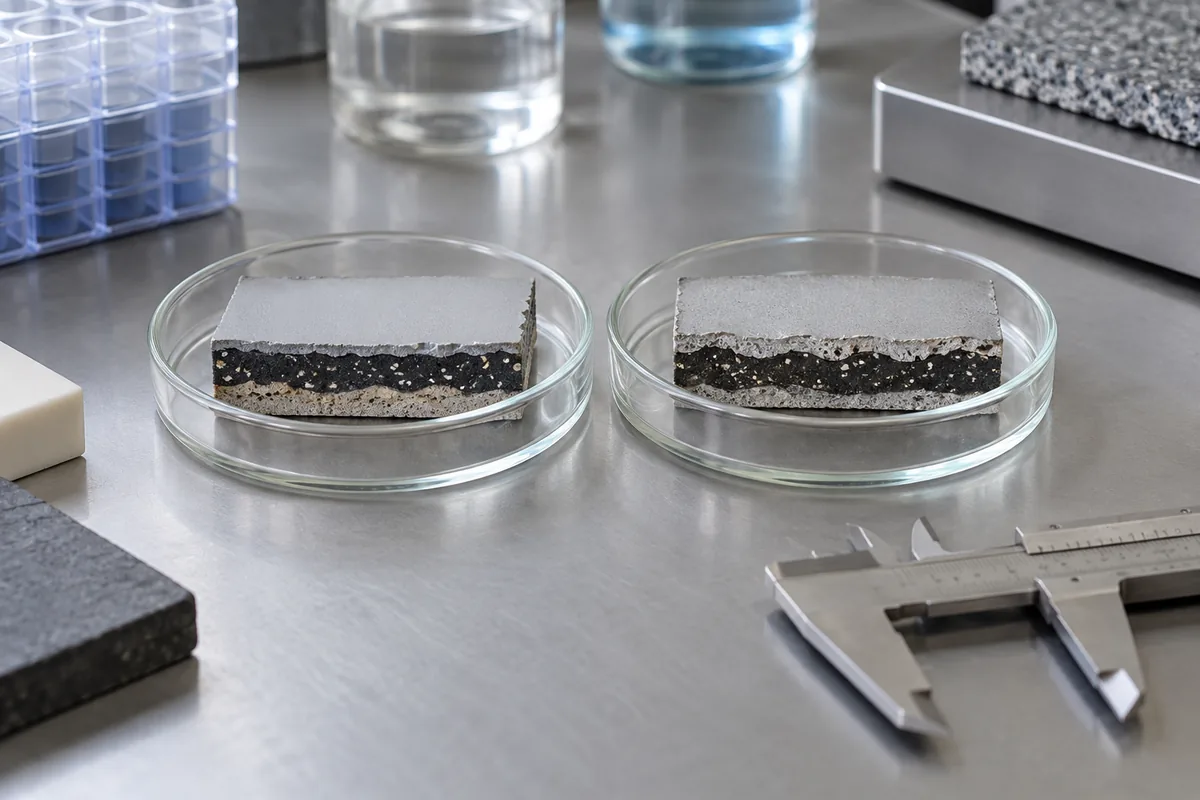
Two samples may look the same yet differ in composition or properties. The reverse is also possible: different surfaces belong to the same material after different treatments. For a sound comparison, the task, sample provenance and comparability of the conditions in which they were obtained need to be established in advance.
Clarify what «the same» means
Matches in colour, composition, grade, properties and specific source represent different levels of finding. The examination must answer the agreed question. Similar chemical composition does not automatically establish that two fragments were separated from the same item or come from the same batch.
Inventory and provenance
- Identify each object separately and retain its packaging.
- Specify the exact sampling location and position within the product.
- Record the date, sampling method and previous treatment.
- Keep the samples to be examined separate from comparison and control samples.
- Submit documents on the stated grade, manufacturer and batch, if they relate to the object.
Why a surface can be misleading
Coating, contamination, heating, contact with moisture and wear can change appearance and the parameters available for examination. The specialist therefore clarifies whether the base material, an individual layer or their combination is being examined. Mixing layers when sampling on your own may make the result unsuitable for answering the original question.
Comparability of methods
Results from different laboratories are compared with regard to the method, sample preparation, units, limits of determination and test conditions. A difference between two numbers does not always mean a contradiction. Sometimes different characteristics were measured, or the results relate to objects prepared differently.
Before any destructive intervention, the required quantity, sampling location and permissibility of altering the item are agreed. Sample requirements depend on the chosen task; a generic small fragment taken «just in case» may be unsuitable for testing the properties of the whole product.
How to describe the limits of findings
The opinion must make clear which features were examined and which portion of the submitted material the result concerns. One local sample may be insufficient for a finding about a heterogeneous product or an entire delivery. Extending the result requires a separate justification.
For a preliminary assessment, provide a description of the object, photographs and the specific disputed parameter. This helps select the field of examination and necessary documents without promising in advance that materials are identical, different or conforming based solely on visual similarity.